

Why is the CRA still targeting pandemic aid recipients?
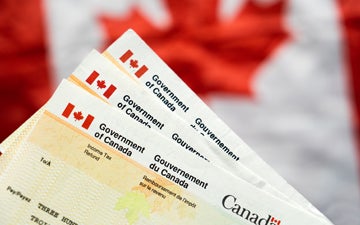
Continued collection attempts against people who received pandemic benefits shows a punitive logic that doesn’t fit the scale of the alleged transgressions
WHILE people across the country were preparing to ring in the new year, the Canada Revenue Agency took the time to issue a stern warning: if you erroneously received emergency pandemic benefits five years ago, you can run but you can’t hide.
It was a chilling message, shared in several news outlets across the country on December 30, 2025, seemingly designed to spook the thousands of low-income Canadians who the CRA says owes them money because, allegedly, they were not eligible for the pandemic benefits they received.
Our specialty community legal clinic has fielded hundreds of calls asking for help on this issue over the last five years. In fact, this is one of the top issues that community legal clinics across Ontario are still contending with, many years after these benefits were issued. The need has been so great, it prompted a partnership between public legal service providers and the private bar in early 2024. It’s not just an Ontario problem, though. People all over Canada are facing steep pandemic-era debts to the CRA with no clear process for relief.
The CRA’s tough stance on alleged pandemic-era benefit overpayments masks longstanding problems with their approach. Many of our clients are low-wage workers who were actually eligible for benefits, but struggle with proving it, particularly if they worked in cash-based, part-time, contract or precarious work where they may lack the formal documentation that CRA typically requires. In other cases, vulnerable clients like persons with intellectual disabilities received the benefit erroneously, or were defrauded. Those cases garner even less care from the CRA.
For many clients, eligibility would have been difficult to prove in 2020. Five years on, it is nearly impossible for the many honest, low-income Canadians who received emergency benefits and for whom they were a lifeline.
Fighting the CRA on pandemic benefit repayment is also confusing and expensive. The CRA’s internal review process is opaque, and people often do not understand why they were found ineligible in the first place because CRA warning letters use vague, boilerplate language. We often hear from eligible individuals whose internal reviews were unsuccessful. After that, their only option is to bring an application for judicial review in Federal Court. This is a complex legal process that takes time, money, and capacity. Even when someone can access legal support, the process is draining and laced with anxiety.
Though they often publicly express a willingness to work with individual clients, the CRA has been anything but understanding. They have threatened to garnish wages or other sources of income, and in their December 30 warning, they even threaten legal action.
Compare this to the language used in their 2023 post-payment audit of the Canada Emergency Wage Subsidy (CEWS) program (a pandemic era grant program paid to businesses that lost revenue), where erroneous receipt of CEWS funds is chalked up to “calculation errors and lack of documentation rather than confirmed ineligibility.”
For individuals seeking relief of pandemic benefit-related debt, the CRA has offered limited options and only after months of fighting. The “relief” options we have seen include putting the debt on hold for an undisclosed but finite amount of time, leaving clients worried about having to go through the process of begging for relief again; or having the tax agency confiscate some of the government credits that make up a significant portion of income for people living in poverty. In all cases, the financial hardship outweighs the value of the money and the cost of pursuing it, pushing people who are already squeezed further into poverty.
The only option the CRA has not yet tried is creating clear, accessible avenues for debt relief. Rather than spending millions of dollars recouping these long-spent funds, the CRA should establish a low-barrier process for pandemic benefit debt remission and write-offs, including creating a simple process for people to ask the government to cancel or reduce debts and explain their individual circumstances.
It’s a new year — maybe it’s time for the CRA to try something new.
Claudia Calabro is a community organizer and Nabila Qureshi is a staff lawyer for the Income Security Advocacy Centre (ISAC), a specialty community legal clinic that focuses on protecting and expanding the rights of low-income Ontarians.
For another perspective on this issue, read Op-Ed: The CRA should own its errors with COVID benefits by John Stapleton in Canadian Affairs. This article was originally published by the Canadian Centre for Policy Alternatives and is reprinted under the Creative Commons Attribution-Noncommercial-No Derivative Works 3.0 Unported license. Title image: iStock photo ID 1485471985.






(0) Comments