

CRA is now auditing two years at once. Smaller practices should pay attention
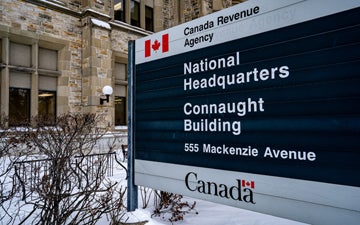
The Canada Revenue Agency is organizing its audit work around patterns across years, writes Syed Saif Ali. The bottom line for practitioners is not alarm
 |
Syed Saif Ali, CPA, CGA is a Director of Taxmetic, a bookkeeping and tax practice serving professionals and businesses across the GTA and Ontario. The firm maintains a current reference on Ontario corporate tax deadlines and rates for clients available here. |
THE CANADA REVENUE AGENCY has changed the shape of its large business audits. Reporting by the tax law firm Millar Kreklewetz on a recent industry roundtable describes a quiet but consequential shift inside the International and Large Business Directorate: auditors may now work to two year audit workplans, opening files with records requests that cover two taxation years at once where similar issues run from year to year, beginning with the 2023 and 2024 years.
Most of us will never sit across the table from that directorate. Its files start at $250 million in gross revenue. But audit administration has a direction of travel, and this one points squarely at habits every practice should already be building into its SME files.
What actually changed
Under the traditional model, an audit opened on a single year. The taxpayer produced that year's records, the auditor tested them, and a second year entered scope only if the first one raised concerns. The two year workplan removes that sequencing. Where an issue is recurring by nature, transfer pricing positions, intercompany charges, deductions that repeat annually, the auditor starts with both years in hand and compares them from day one.
The structure of the directorate reinforces the approach. CRA's own published evaluation of its international and large business programs describes an integrated team model, with domestic, international, and tax avoidance auditors working a file together under a case manager who is the single point of contact: one team, one voice, one audit. The same evaluation offers the practical reason for the change. The $250 million revenue threshold that defines a large business has not moved in more than two decades, while the population above it has grown. The agency is covering more ground per file because it has to.
Millar Kreklewetz also notes that the administrative logic is not confined to income tax. Recurring issues span reporting periods in GST and HST audits just as naturally, and practitioners should expect the same multi period instinct wherever CRA examines a position that repeats.
Why this matters below the $250 million line
Nothing in the announcement changes SME audit selection tomorrow. The reason to pay attention is subtler. The tools and habits CRA builds for its largest files, data driven selection, integrated teams, period spanning requests, have a history of migrating into its general compliance work. Reviews and examinations of smaller businesses already arrive with requests that reach across periods, particularly in HST, where a position taken in one quarter is rarely examined in isolation.
For a practice, the practical consequence is this: the unit of audit readiness is no longer the single year file. It is the consistency of the client's positions across every open year, and our files either demonstrate that consistency or they do not.
The file discipline this rewards
- Treat consistency across years as a review step, not an assumption. When recurring items are treated differently in adjacent years, owner draws, management fees, intercompany charges, HST on a particular supply, the workplan model finds the change immediately. A defensible change documented at the time is a non event. An undocumented one becomes the audit's organising question.
- Write the memo when the position changes, not when the auditor asks. Practitioners know the difference between a file that explains itself and a file that has to be reconstructed under deadline. Contemporaneous notes on why a treatment changed are the cheapest audit protection a client can buy, and they cost almost nothing at the time.
- Organise working papers by issue as well as by year. An auditor working a two year plan asks issue shaped questions. Files that can produce a coherent package on a material position, across both years, set a different tone than two years of chronological records handed over unsorted.
- Answer the first request like it is the whole audit. Under the old sequencing, a minimal first production bought time. Under a workplan, the first request is the main event, and an incomplete or disorganised response reads as an invitation to dig. Setting that expectation with clients at engagement, before any letter arrives, is part of the service now.
- Apply the same lens to HST. Ontario practices see this already: place of supply determinations, management fees between related companies, and input tax credits on mixed use expenses are exactly the positions that repeat across periods and attract multi period questions.
What has not changed
A workplan is administration, not law. Normal reassessment periods still close years: generally three years from the notice of assessment for individuals and Canadian controlled private corporations, and four years for other corporations. A two year workplan gives CRA no reach into statute barred years. Taxpayer rights are unchanged, and perspective matters: this remains a large business program, and most SME clients will never meet it directly.
The bottom line for practitioners is not alarm. It is that CRA is organising its audit work around patterns across years, and the practices whose client files already tell a consistent, documented story across those years will find any examination, at any size of file, easier to manage. That has always been the standard. The workplans simply raise the cost of missing it.
Syed Saif Ali, CPA, CGA is a Director of Taxmetic, a bookkeeping and tax practice serving professionals and businesses across the GTA and Ontario. The firm maintains a current reference on Ontario corporate tax deadlines and rates for clients at https://taxmetic.ca/corporate-tax-filing-ontario-deadlines-rates.
The content of this article is intended to provide a general guide to the subject matter. Specialist advice should be sought about your specific circumstances.






(0) Comments