

Part II: Deloitte Cyprus exposed – Global accounting giant accused of faking papers to hide $10B for Russian oligarch

The Deloitte-Abramovich files describe conduct no Canadian accounting firm would touch, writes Canadian tax lawyer and accountant David J. Rotfleisch
The Deloitte-Abramovich files describe conduct no Canadian firm would touch, but the techniques are jurisdiction-neutral. In the second of two articles, Canadian tax lawyer and accountant David J. Rotfleisch maps each one onto the Income Tax Act and the CPA Code, and draws the line every practitioner needs between recording history and manufacturing it. Click here to read part one.
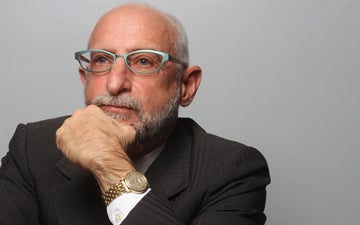 |
David J Rotfleisch, CPA, JD is the founding tax lawyer of Taxpage.com and Rotfleisch & Samulovitch P.C., a Toronto-based boutique tax law corporate law firm. |
The first article in this series examined what Deloitte's Cyprus branch and its spin-off Meritservus are reported to have done for Roman Abramovich: the fabrication and backdating of more than 1,000 corporate documents between 1999 and 2013, and, in the Amiscan Investments matter, the signing of accounts as "true and fair" over records the firm itself had helped fabricate. All of it is alleged and denied, and the denials were set out there.
Part 2 discusses what happened to what it would mean in a Canadian context. Canadian firms do not audit Cypriot oligarchs, but every technique in the files has a domestic analogue, and the Income Tax Act and the CPA Code of Professional Conduct reach each one.
The documents, under the Income Tax Act
A document created in 2008 and dated 2003 to support a transfer that did not occur in 2003 is, in plain terms, a false record. The Act treats it as one.
Paragraph 239(1)(a) makes it an offence to make, or participate in the making of, a false or deceptive statement in a return, and paragraph 239(1)(b) extends the offence to destroying, altering or otherwise dealing with records to evade tax. The Kravin recharacterization and the Amiscan asset removal, transposed to a Canadian taxpayer and a Canadian return, would engage both.
The civil consequences arrive sooner and bite harder than the criminal ones, and they are what a practitioner should actually fear.
Subsection 163(2) imposes a gross negligence penalty equal to 50 percent of the understated tax where a false statement is made knowingly or in circumstances amounting to gross negligence. More important still, subsection 152(4) lifts the normal reassessment period where a misrepresentation is attributable to neglect, carelessness, wilful default or fraud. The practical effect is the point taxpayers and some advisers underestimate: a falsified document does not merely risk a penalty, it keeps the taxation year open indefinitely. There is no statute-barred safe harbour for a return supported by a fabricated record.
Clients sometimes imagine the danger in a document like this is that the CRA might not believe it. The real danger is the opposite. The CRA believes it entirely, treats it as the false statement it is, and uses it to reopen a year that would otherwise have been closed for a decade.
The distinction every practitioner has to hold
Here the Abramovich facts can mislead by over-correction, and the correction matters more to ordinary practice than anything about oligarchs. Documenting a transaction after it has happened is not wrong. It is routine, proper and often necessary.
A declaration of trust, a shareholders' agreement or a loan confirmation executed today and expressed to be made "as of" the earlier date on which the arrangement genuinely took effect is a perfectly valid document.
A bare trust, for instance, arises on the facts from the separation of legal and beneficial ownership; it exists whether or not anyone has papered it. A written declaration executed later does not create the trust. It is evidence confirming a relationship that already existed, and an "as of" recital that accurately states when that relationship arose is an accurate statement, not a false one. Solicitors prepare documents on this basis every week, and the CRA accepts them.
The independent forensic accountant quoted in the source reporting drew exactly this line: there can be legitimate reasons to record an earlier transaction later, but the document should bear the date it was actually signed while recording the true effective date, and it should not be backdated where the arrangement did not in fact exist on the date claimed. That is the whole of it.
The test is not when a document was written. It is whether everything the document says, including the statements it makes about its own execution date and about when the underlying relationship arose, is true.
By that test, two things are improper and must be distinguished from ordinary after-the-fact documentation.
The first is a false execution date: an instrument signed today but presented as having been signed years ago, so that it lies about its own provenance.
The second is an honest execution date attached to an "as of" recital that asserts a state of affairs which did not exist on the earlier date, so that legitimate drafting form is used to manufacture a history. The Kravin and Amiscan documents fail on both counts, because the arrangements they describe did not exist when they claim. An honest confirming document, bearing its real date and reciting a true effective date, would have been unobjectionable. The problem was never the timing of the drafting. It was the lie.
There is nothing wrong with papering an arrangement after the fact. What destroys a file is a document that lies about itself, either by carrying a date it was not signed on or by reciting a state of affairs that never existed. The first kind of document confirms history. The second kind invents it, and once a CRA auditor finds one invented document, every honest document in the same file is read in its shadow.
The accountant's own exposure: section 163.2
This is the part of the file a Canadian practitioner should read most closely, because it does not depend on anything happening to the client.
Section 163.2 imposes third-party civil penalties on a person who makes, or participates in, assents to or acquiesces in the making of, a statement that the person knows, or would reasonably be expected to know but for culpable conduct, is a false statement that another person may use for a tax purpose. It has two limbs, the planner penalty and the preparer penalty, and both are assessed against the adviser personally. The conduct described in the first article, an accountant drafting or incorporating into financial statements documents the accountant knows to be false, sits squarely within it.
Two features of section 163.2 matter for the fact pattern here.
First, the standard is culpable conduct, defined to include conduct that is tantamount to intentional conduct or that shows an indifference as to whether the Act is complied with. An accountant who signs whatever is put in front of him, which is how the source reporting characterizes the nominee directors' role, is not insulated by having asked no questions; indifference is the very thing the section captures.
Second, nothing in an engagement letter or a management representation shifts the exposure. A representation from management that records are accurate is no defence to a penalty for having helped fabricate those records. The adviser cannot rely on the client's assurance about a document the adviser wrote.
Independence: the breach beneath the breach
Expressing an unmodified opinion on financial statements the auditor knows to be materially misstated is the defining failure of an assurance engagement. In Canadian terms it offends the auditor's most fundamental obligations under the CPA Code of Professional Conduct: the rules requiring integrity and due care, the rule prohibiting association with information the member knows or should know is false or misleading, and the independence standard that underpins any assurance engagement.
The Abramovich arrangement did not merely strain independence. It abolished it.
On the reporting, the same firm acted as nominee director, nominee shareholder, administrator and independent auditor of the same companies. That is not a heightened threat to independence; it is the simultaneous presence of every category of threat the Code names.
The self-review threat is total, because the auditor is reviewing its own work. The self-interest and advocacy threats follow from the firm's role in administering and benefiting from the structure.
The management-participation threat is engaged the moment the auditor's own personnel sit as directors making, or purporting to make, the company's decisions. One cannot audit one's own directorship, and one certainly cannot audit one's own forgery. CAS 200 frames the entire audit around obtaining reasonable assurance that the statements are free of material misstatement, whether caused by error or fraud. An auditor who authored the misstatement has not failed to detect fraud. The auditor has committed it.
Corporate residence: the point that cuts the other way
A further strand of the wider Cyprus Confidential project, developed by the same journalists in reporting published in January 2025 and separate from the October 2026 findings discussed in Part 1 of this series, is a corporate residence question: whether BVI companies in the structure were in substance managed from the United Kingdom rather than offshore. The Canadian analogue is the common law test of central management and control, under which a company incorporated abroad is nonetheless resident in Canada if its real decisions are made here.
It is worth stating the point that cuts in the taxpayer's favour, because the opposite impression is widespread and wrong.
What determines residence is where the decisions are actually taken, not the nationality or home address of the people taking them. There is nothing improper about Canadian residents travelling to a foreign jurisdiction to hold genuine board meetings and make a company's decisions there. A Canadian director who flies to Nicosia, considers the material, deliberates and decides has exercised central management and control in Cyprus, and the company is managed there in fact.
What fails is the appearance of foreign management without the substance: directors resident abroad but inactive, meetings minuted but not held, resolutions drafted in Toronto and couriered out for signature. The nominee directors in the Abramovich files, who on the reporting ceded decision-making to staff in Moscow and London while signing what was put before them, are the textbook example of the structure that does not work. Local nominees who rubber-stamp instructions from Canada establish Canadian residence; they do not avoid it.
What a Canadian accountant should take from the Deloitte-Abramovich debacle
Three points carry over regardless of jurisdiction:
- Substance is not defeated by paperwork. A company that earned interest on billions in its own accounts earned taxable income, and no retroactively drafted trust declaration changes that. A CRA auditor, like the forensic accountants who reviewed these files, reads conduct ahead of recitals, and where a document's stated history is contradicted by the ledgers or by the absence of any contemporaneous trace, it is the document that loses.
- The moment a practitioner creates or dresses a record to support a position, the engagement changes character. A weak but honest contemporaneous record is a defensible file. A strong but fabricated one is evidence of an offence, and it forfeits the practitioner's credibility on everything else in the file. The separation between advising on a transaction and attesting to its recording exists precisely so that the person who holds the pen is not also the person who certifies the result.
- The independence rules are not administrative overhead. The Abramovich files are what the Code's catalogue of threats looks like when every safeguard is ignored at once: the auditor as director, the auditor as drafter, the auditor as the beneficiary's gatekeeper. Each threat the Code names was present, and the opinion was signed anyway.
The rules exist so that the question a practitioner faces is never the one Deloitte's Cyprus branch is alleged to have answered the wrong way: whether to certify as true an account one knows to be false.
David J. Rotfleisch, CPA, CA, JD, is the founding tax lawyer of Rotfleisch & Samulovitch P.C., a Toronto-based boutique income tax law firm (taxpage.com), and is certified by the Law Society of Ontario as a specialist in taxation. Contact David at david@taxpage.com. This is general information, not legal or accounting advice, and is current to the date of writing. Title image: Quiet morning at the Nicosia city centre, Eleftheria Square, Konstantinou Palaiologou, Nicosia, Cyprus (Athina Vrikki, Unsplash).







(0) Comments